
Charred Wood at the 'Noah's Ark' Site: What Was Found, and What Every Side Says
Drillers pulled charred wood from 30 feet beneath a ship-shaped mound near Mount Ararat. Believers, creationist skeptics and geologists all read it differently, and lab results won't arrive until spring.

By Nate Jurewicz · Founder & Chief Editor
· 5 min read
For more than 60 years, the argument over a boat-shaped hill in eastern Turkey has been fought with aerial photos, radar images and a lot of faith in both directions. This month, for the first time, the people digging there say they have pulled up wood.
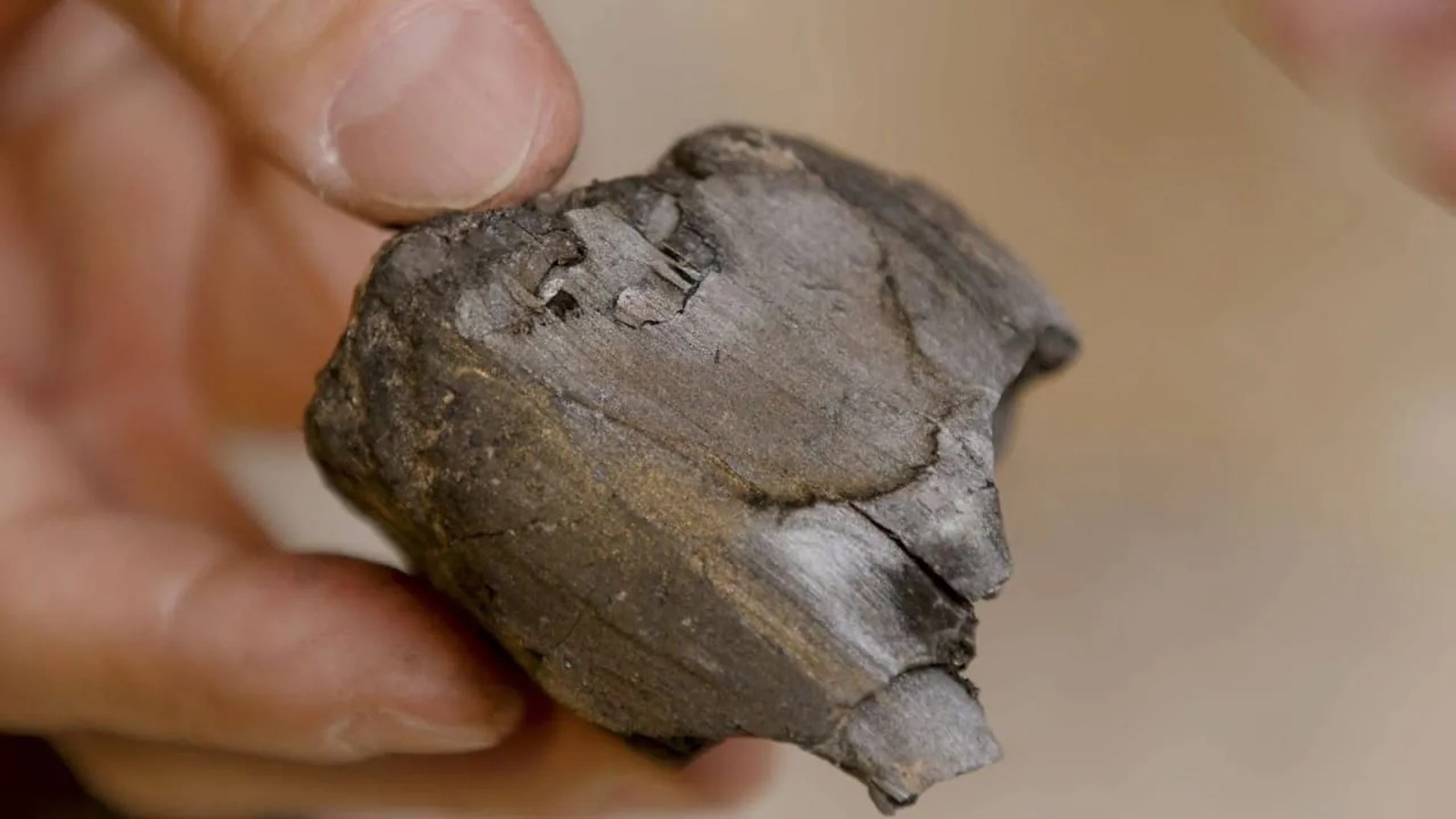
Researchers working at the Durupınar formation, about 18 miles south of Mount Ararat, say they recovered dark, charred wood fragments from roughly 30 feet (about nine meters) below the surface on the mound's southern slope. Some pieces show grain and growth rings. The team leader believes one piece was shaped by hand.
Nobody knows yet how old the wood is or where it came from. Here is what was found, who is making which claims, and what it would take to settle the question.
What was found
The 2026 dig ran from late June to mid-September and was the most extensive investigation the site has ever had. It included the first deep-core drilling at Durupınar, reaching more than 60 feet in places, plus ground-penetrating radar, drone mapping and hundreds of soil samples.
It was led by Cenker Atila, an archaeology professor at Sivas Cumhuriyet University in Turkey, working with Noah's Ark Scans, a U.S.-based group founded by Andrew Jones.
- The wood. Photos released in November show cracked, blackened fragments. Noah's Ark Scans says some have "sharp, cut edges" that set them apart from naturally weathered wood. Atila says one piece "appears to have been slightly shaped and flattened using an axe or a knife."
- The testing. The fragments have gone to labs in four countries for carbon-14 dating and to identify the tree species. The team says it will also look for traces of bitumen or sap, which could point to a waterproof coating.
- The timeline. The team expects to publish its final report in late April or May 2027.
- Earlier work. In 2024 the group reported that soil inside the outline had about three times as much organic matter and 38% more potassium than soil outside, which it suspects could be decayed wood. Radar scans have also shown straight lines and right angles that the team calls corridors and chambers.
The case for the Ark
Supporters point to the shape and size first. The formation is roughly 515 to 538 feet long, close to the 300 cubits Genesis gives for the Ark, and it sits in the region the Bible calls "the mountains of Ararat." A Turkish Army captain, İlhan Durupınar, spotted it in aerial photos in 1959, and amateur archaeologist Ron Wyatt promoted it as the Ark in the 1980s.
Atila calls the wood "one of the most significant discoveries" at the site. Khosrow Bakhtar, an engineer who built his own underground imaging system, says the radar returns point to something human-made, though even he hedges: "It could be a ship. It could be a spaceship."
The team's position, in short, is that the evidence now goes beyond what a purely natural rock formation would explain, and that the lab work will put that to the test.
The skeptics inside the faith
Some of the strongest pushback comes from fellow Christians who believe in a literal, worldwide Flood.
Answers in Genesis, the creationist group behind Kentucky's life-size Ark Encounter, has rejected Durupınar for years. Founder Ken Ham said flatly: "No, we don't believe Noah's Ark has been found at the Durupinar site." Its argument goes like this:
- The site sits on top of rock layers that the group's own Flood model says were laid down during the Flood or after it.
- An Ark resting there would have had to land on ground that didn't exist yet.
- Wooden remains would also be unlikely to survive the thousands of years since.
Jim Parker, a professor at New Orleans Baptist Theological Seminary who has followed the site since the late 1980s, has taken a middle path. He finds the new work interesting, but he has urged the team to publish its data quickly and to stop calling the mound the Ark until all the evidence is analyzed.
The geologists
Mainstream geologists have the simplest explanation: it's rock.
In 1996, geologist Lorence Gene Collins and David Fasold published a paper in the Journal of Geoscience Education arguing that the formation is a doubly plunging syncline, a natural trough-shaped fold in tilted rock. They said the "walls" and "iron bracing" that Ark hunters saw in radar scans were natural bands of iron minerals. Fasold, notably, had once been one of the Ark's biggest promoters before he changed his mind. A 1960 expedition that dug inside the outline also found only soil and rocks.
On the wood itself, skeptics raise practical questions:
- Charred wood turns up at countless sites and can be carried downhill by landslides and mudflows.
- A piece found 30 feet down isn't necessarily part of anything bigger.
- "Tool marks" are hard to judge from photos.
Even the most favorable coverage of the dig notes the obvious: the fragments have not been independently linked to Noah's Ark, and no one has yet shown that the underground features belong to a ship.
Other traditions, other mountains
Not everyone who believes in the Flood story looks to Ararat at all.
- Islam. The Quran says the Ark came to rest on al-Jūdī. Many Muslims, and some early Christian writers, identify that with Mount Judi in southeastern Turkey, about 200 miles away.
- Ancient Mesopotamia. Flood stories there name other peaks.
- Christian and Jewish readers who see the Flood as local or literary. They would not expect physical remains of the Ark to exist anywhere.
So even a confirmed ancient boat at Durupınar would not settle every theological argument, and a negative result would not settle them either.
What would actually settle it
Here is what to watch for in the spring:
- The carbon dates. If the wood comes back thousands of years old, the story gets much bigger. If it is a few centuries old, it likely came from trees or later human activity.
- The tree species. Genesis says the Ark was made of "gopher wood," a term scholars still can't pin down. A species that never grew in the region would be notable.
- Where it sat. Whether the wood was part of a structure, or loose pieces in a mudflow, matters as much as its age.
- Independent review. The biggest test is whether outside archaeologists and geologists, not just the team, can examine the samples and data and reach the same conclusions in a peer-reviewed paper.
Until then, the honest answer is the unsatisfying one: something is down there, and nobody knows yet what it is.
Sources
- Daily Galaxy: Scientists may have found evidence of Noah's Ark beneath a mound in Turkey
- The Jerusalem Post: Noah's Ark Scans reports charred wood at Durupinar
- Newsweek: Noah's Ark hunters say they've found wood with tool marks
- Fox News: Noah's Ark site yields first look at charred wood fragments
- Greek Reporter: Researchers find charred wood at site associated with Noah's Ark
- Baptist Press: Durupinar results generate strong debate
- IBTimes: Noah's Ark search takes new turn
Questions readers ask
What is Media Mogul News?
Media Mogul News is an independent, reader-supported news site led by Chief Editor Nate Jurewicz. We cover the stories corporate media skips: political corruption, Big Pharma, the deep state, election integrity, cannabis freedom, crypto and the money behind all of it.
What is your political stance?
We are pro-liberty, pro-cannabis, anti-war and anti-corruption, and we hold both parties to the same standard. We are not a party outlet. When the people we agree with get something wrong, we say so.
How is Media Mogul funded?
By readers. We take no pharmaceutical advertising and no money from the industries we cover. Support comes from newsletter readers, donations and Media Mogul merchandise.